
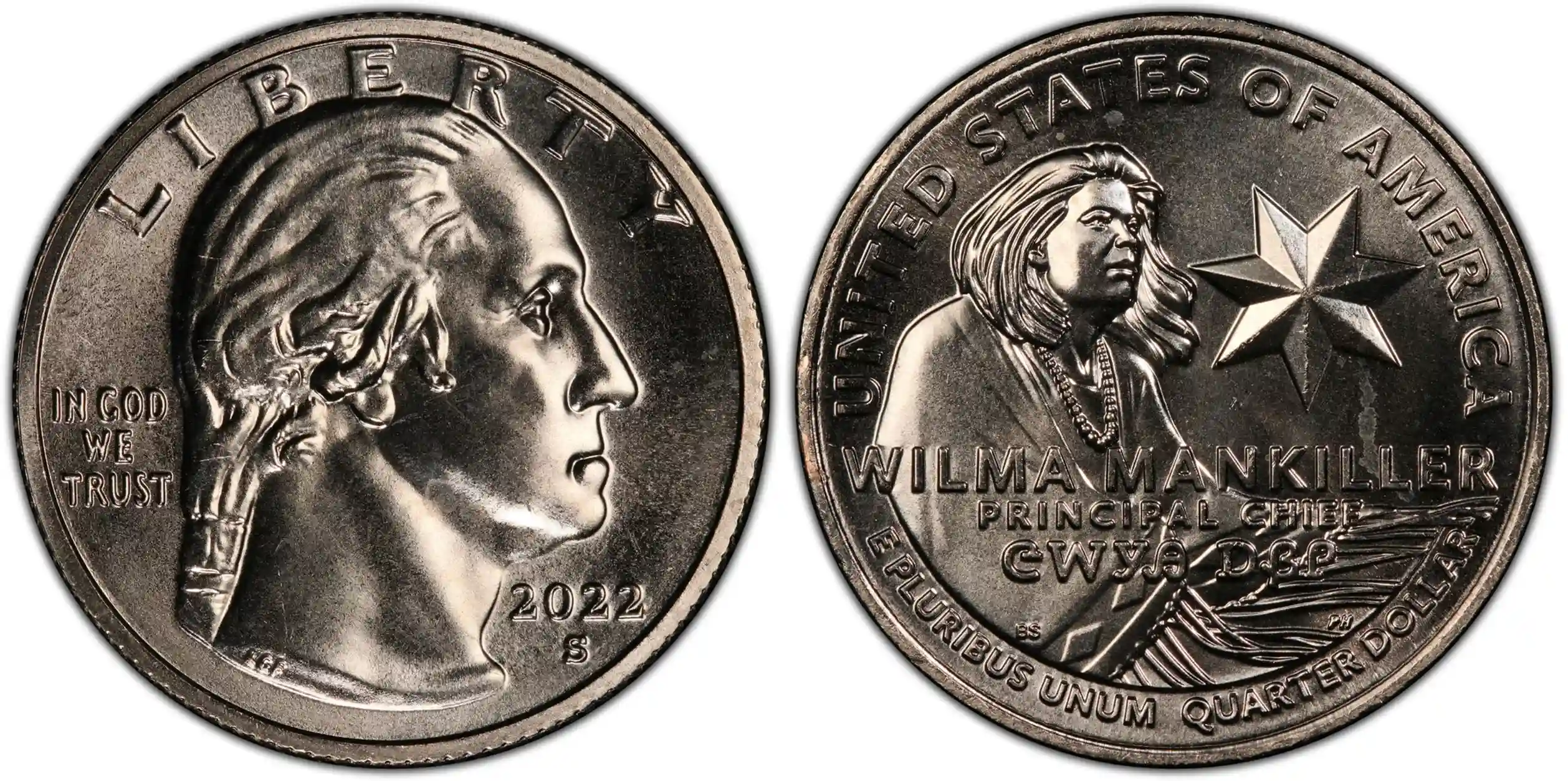
Auction prices for Wilma Mankiller's quarter reach $2,500 on the actual online auction platforms. The value can go up with two coin conditions: high Mint State and unique defects.
Year | 2022 |
Diameter | 24.26 mm |
Weight | 5.67 g |
Composition | Copper-nickel clad copper |
Edge | Reeded |
Total Mintage | More than a billion issues |
How much is Wilma Mankiller quarter worth today? The highest prices in the modern coin market belong to mechanical mistakes that escape the factory floor. When the high-speed machinery at the United States Mint malfunctions, it creates unique treasures that collectors crave.
Wrong-planchet errors represent the peak of auction drama. This event happens when a metal blank meant for one denomination drops into a press fitted with dies for a different coin.
A prominent auction house shocked the numismatic community when it listed a 2022 D Wilma Mankiller quarter struck onto a five-cent nickel blank. Because the nickel blank is smaller and thinner than a standard quarter blank, parts of the rim design vanished.
Collectors recognized the extreme rarity of this piece instantly. Fierce bids pushed the final hammer price past the $4,000 mark. The sheer scarcity of modern planchet mix-ups keeps these prices high because automated mint sorters catch almost every mistake before shipment.
The US Mint manufactures quarters from a layered metal sandwich. It places a pure copper core between two nickel-copper outer layers. Sometimes, an outer silver-colored layer falls away before the coin press strikes the blank. This leaves one side of the quarter bright red while the other remains silver. Certified missing clad examples of the Mankiller quarter regularly bring $300 to $500 at specialist sales.
When the mechanical arms fail to seat a blank properly inside the collar, the steel die strikes it off-center. This mistake leaves a blank crescent shape on the metal. The larger the off-center percentage, the higher the final bid at auction.
You do not need a bizarre factory error to make money at a coin auction. Standard coins that enter general circulation usually suffer scratches when they slam into other coins inside transport bags. Therefore, a coin that avoids this damage becomes a condition rarity.
Mint State grades use a scale from 60 to 70. A grade of MS-70 represents absolute perfection, a feat that circulating business strikes almost never achieve.
Only a handful achieve the coveted MS-68 grade from professional third-party graders.
An MS-65 Mankiller quarter holds a market value of around $5.
MS-68 reaches $2,500.
The San Francisco Mint produces specialized coins for collectors. These pieces do not enter general circulation rolls.
The Mint sells standard copper-nickel proofs alongside premium 99.9 % fine silver versions. Because collectors handle these pieces with care from day one, high grades are common.
Perfection is the baseline here. An MS-70 or PR-70 Deep Cameo coin commands a solid price bonus, while an MS-69 version drops down to basic raw cost.
Grade | Auction Price Range | Features |
Philadelphia MS-68 | $150–$1,200 | Intense original luster, no surface scuffs |
Denver MS-68 | $200–$2,500 | Flawless strike clarity, pristine surfaces |
San Francisco Clad Proof PR-70 DCAM | $20–$75 | Mirror fields, frosted design contrast |
San Francisco Silver Proof PR-70 DCAM | $45–$140 | Brilliant white sheen, precious metal content |
You cannot simply post a clear photo of a shiny quarter online and expect a giant payout. Professional auctions operate under strict rules, and specific market mechanisms dictate the final hammer price.
An uncertified coin is a risky asset. Professional collectors call these raw coins, and they rarely buy them for significant sums because fakes flood the market.
The Power of the Slab – true high-value auctions require certification from top firms like the Professional Coin Grading Service or the Numismatic Guaranty Company.
The Guarantee – these companies employ experts who check the coin under microscopes, verify its weight, ensure its authenticity, and seal it inside a tamper-proof plastic holder. This slab gives remote bidders total confidence to push their offers into the thousands.
The date on the grading label can alter the final price of the coin due to marketing programs.
First Strike Designations – graders apply this label to coins that arrive at their facilities within the first thirty days of the official release date.
The Price Bubble – early in a coin's lifecycle, registry collectors pay massive prices to secure the very first top-grade copies. Over time, as people search more bank boxes, the population of high-grade coins expands, which often stabilizes or lowers the auction price.
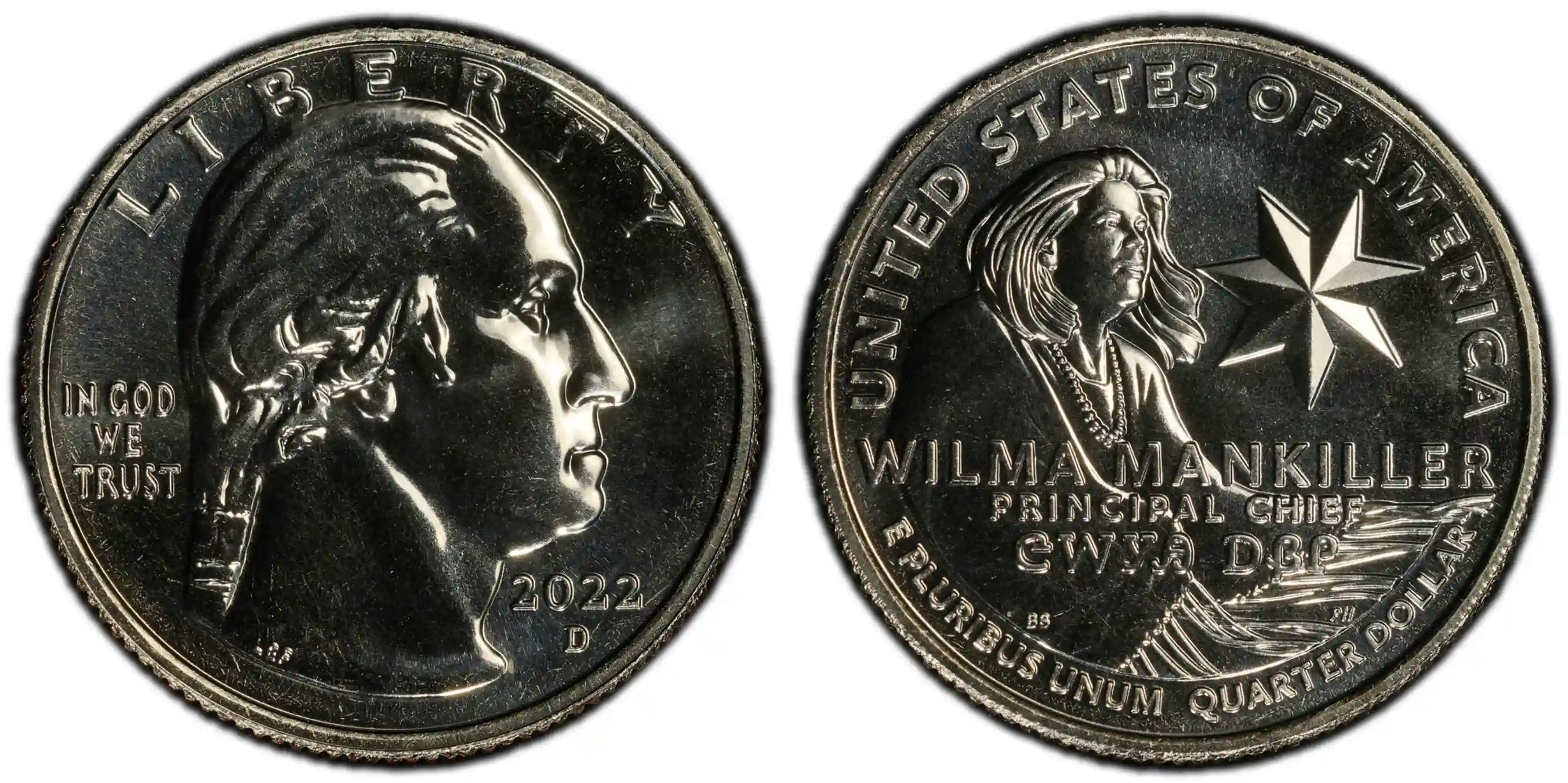
Check the Luster – tilt the coin under a single light source. Look for a cartwheel effect where the light spins across the surface like spokes on a bicycle wheel. This effect proves the coin retains its original factory surface.
Scan the Contact Points – look closely at Wilma Mankiller's cheekbone and the fields around George Washington's portrait. These high areas hit other coins first. A true auction piece must show zero deep gashes or hairline scratches in these zones.
Evaluate Strike Sharpness – inspect the tiny Cherokee Syllabary characters. A weak strike leaves these details blurry. A strong strike prints them sharp and deep.
Professional Venues – companies such as Heritage Auctions and GreatCollections publish verified archival records. These platforms require secure payment methods and expert verification. If a coin sells for $2,000 here, that figure represents true market demand.
Peer-to-Peer Risks – platforms like eBay feature thousands of unverified listings with fake offers. Always look at actual sold filters rather than active asking prices to gauge reality.